Data & tools
Explore the open-access courses, tools and datasets by U-Shift to study sustainable urban transport
Tools for research
Decision support tool
IMPT
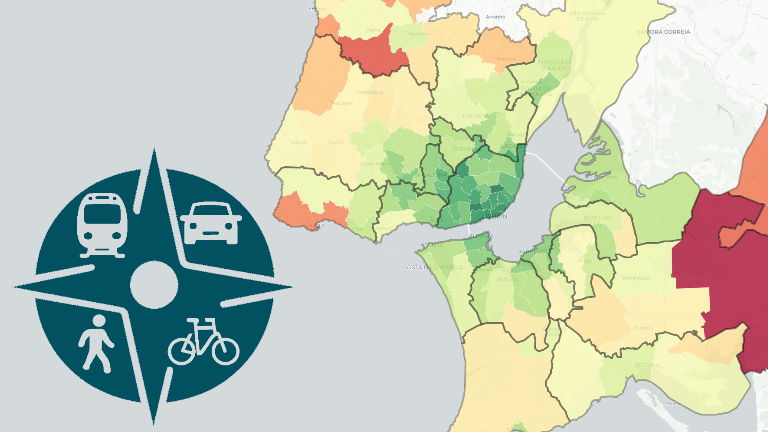
Multimodal transport poverty index developed for the Lisbon Metropolitan Area
Decision support tool
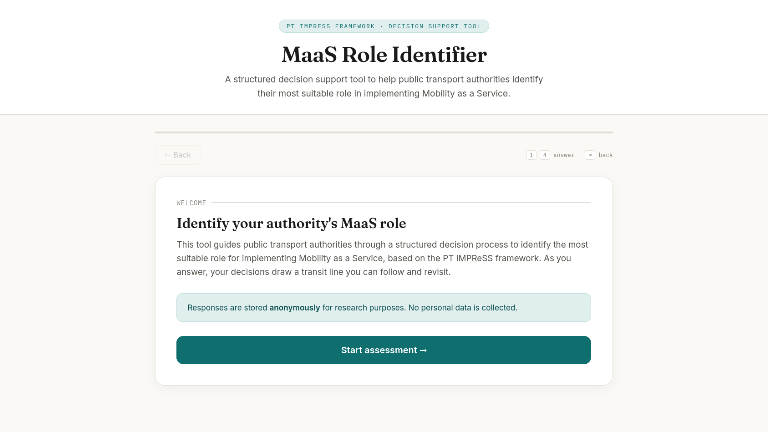
MaaS Role Identifier
A structured decision support tool to help public transport authorities identify their most suitable role in implementing Mobility as a Service.
R package, Decision support tool
GTFShift
R package to explore and analyse GTFS files with a focus on identifying high frequency corridors
Tools for data
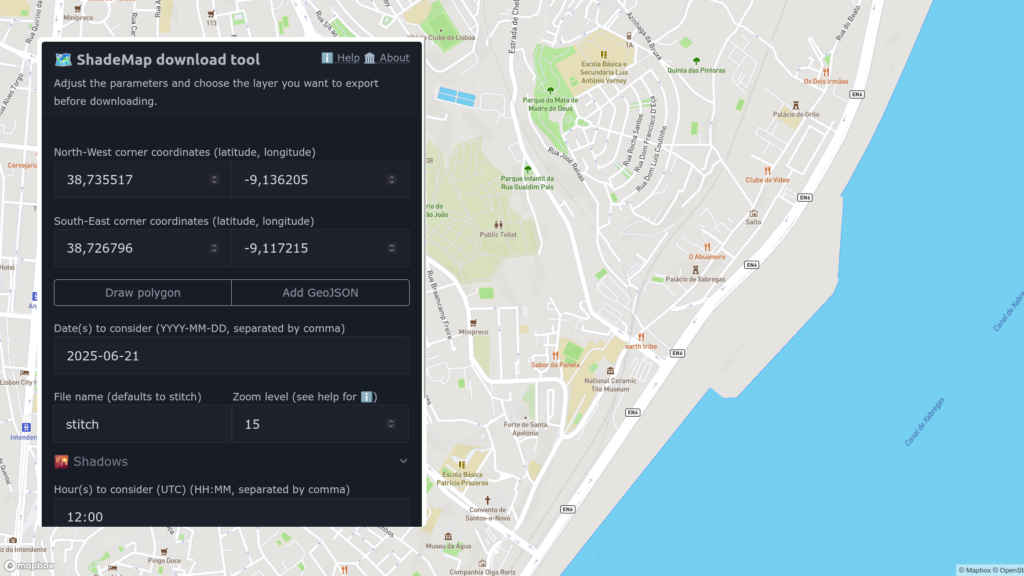
ShadeMap Download Tool
Interactive tool that allows to export shadow and sun exposure layers from ShadeMap over a custom area, with a high level of detail.
Data
CYCLING ACCIDENTS
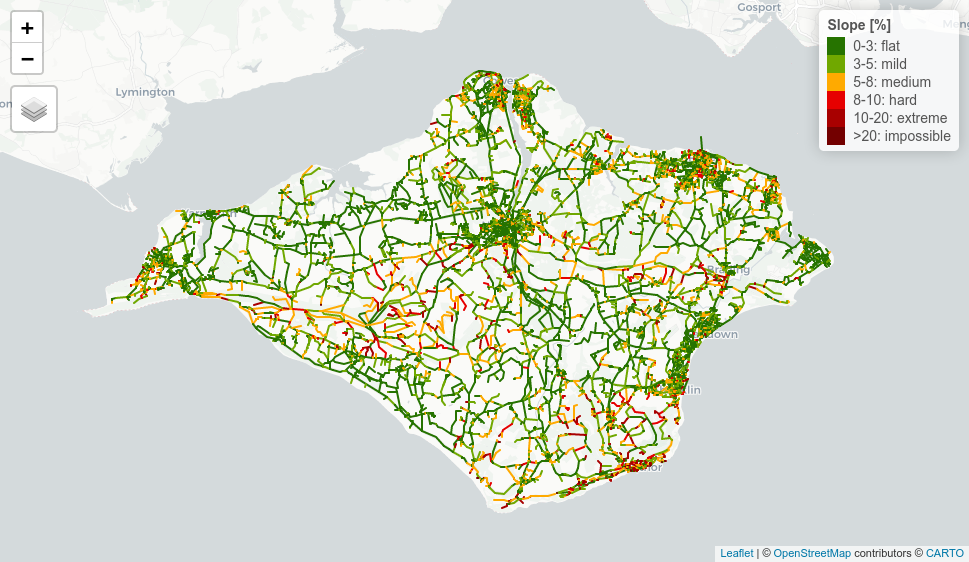
Lisbon street’s inclinations
Shapefile and vectorial map of inclinations for each segment of the road network of Lisbon (2013).
Tools for surveys
Portuguese Zip-Codes
7 digit portuguese zip-codes (CP7) with coordinates.
Pedestrians
Lisbon pedestrian network
Shapefiles of digitalized pedestrian netwokr for distinct Lisbon neighbourhoods, from IAAPE project.
CYCLING
Lisbon cycling network
Shapefile of existing Cycling Network for each year in Lisbon.
Tools for surveys
Weighted Centroids
Shapefile of population weighted centroids of Lisbon Metropolitan Area, for each District (Freguesia), based on Census 2021 data.
bike sharing
Gira’s Stations
Shapefile with Gira stations location, as August 2019. Data retrieved from EMEL Open Data portal.
Tools for modeling
Lisbon POIs
Points of interest from OpenStreetMap (2024), including shops, amenities, heath, tourism, entertainment and leisure.
Tools for modeling
Lisbon buildings
Dataset with georeferenced buildings, their height, implementation area, and volume.
Tools for modeling
Lisbon parking
Dataset with georeferenced parking places from EMEL ArcGis dashboard.
Tools for learning
R, GIS
Quantitative Methods of Analysis in Transportation
This course aims to provide students with tools to deal with transportation datasets using R programming, an open-source and widely used tool for data analytics in urban mobility.
R, Visum, Vissim, SUMO
Traffic Simulation Models
This course explores how human and organizational choices drive transport behaviour, equipping students with modelling tools that range from graph theory to utility maximization, at both macroscopic and microscopic levels. Grounded in real-world data collection, these models not only capture the complexity of transport systems but also serve as decision-making tools for testing and evaluating interventions.
R, Python
Transport Demand Modelling
This course equips students with the tools to model and forecast transportation demand, covering several of its dimensions from origin-destination matrix estimation and discrete choice models to traffic assignment and network evaluation.
R
Safety and Security for Transportation Systems
Supporting materials for course focused on understanding and treatmenting specificities related to safety and security for transportation realated to all main modes and infrastructures (road, aviation, railway, transit), in urban and rural environments.